
Cervical Spondylosis: Causes, Symptoms and Treatment Options
Do you frequently experience neck pain, stiffness or difficulty turning your head? Do you sometimes feel pain spreading from your neck to your shoulders, arms or fingers? These symptoms may be associated with a condition called cervical spondylosis.
Cervical spondylosis is a common age-related condition that affects the bones, discs and joints of the neck. It develops gradually as the structures of the cervical spine undergo wear and tear. Although it is more common in older adults, younger people can also experience neck-related problems.
In many cases, cervical spondylosis can be managed with appropriate treatment, physiotherapy and lifestyle changes. However, when it affects nearby nerves or the spinal cord, medical evaluation becomes particularly important.
Understanding the causes, symptoms and available treatment options can help you recognise the condition and seek timely orthopaedic care.
What Is Cervical Spondylosis?
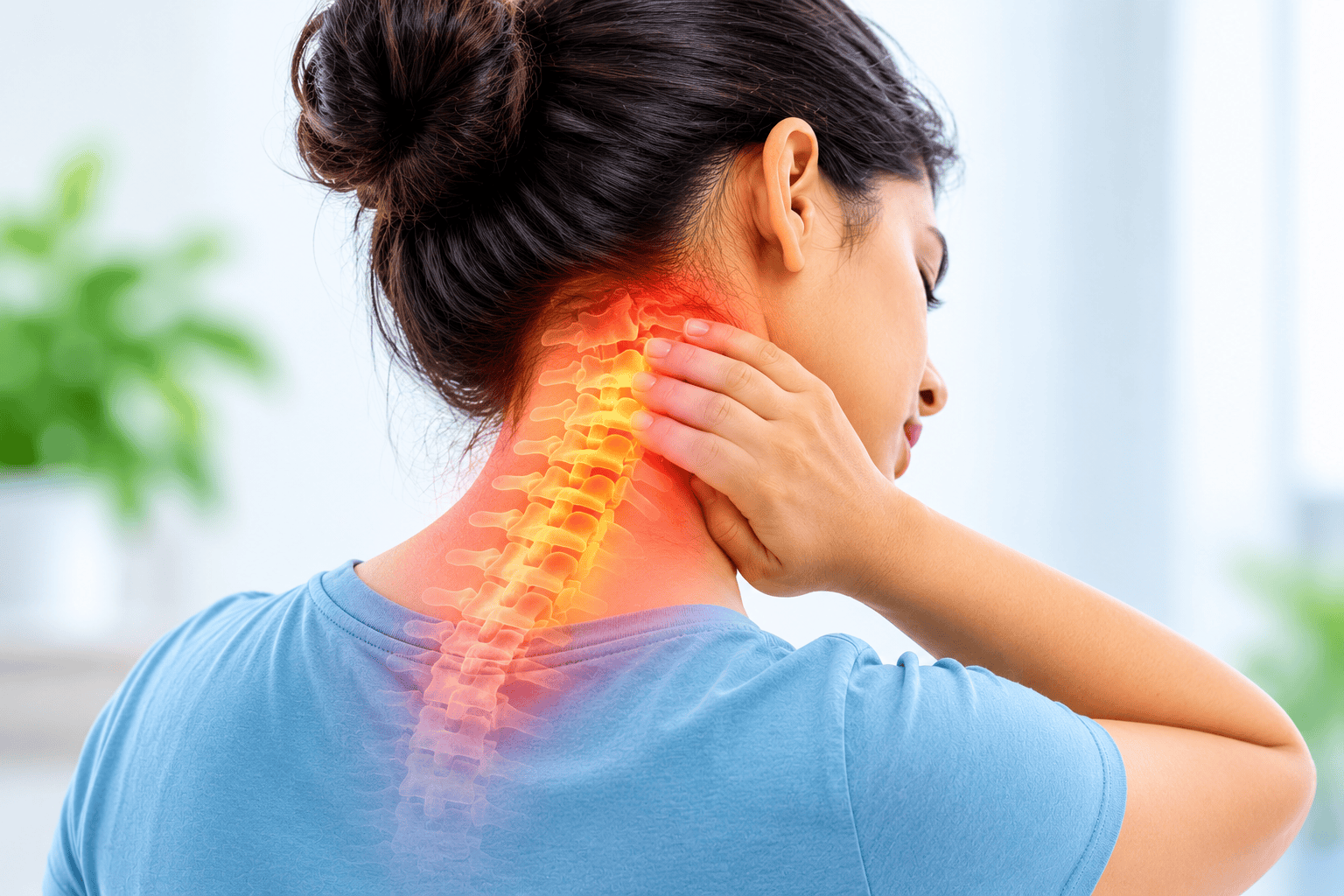
Cervical spondylosis refers to age-related changes in the cervical spine, which is the portion of the backbone located in the neck.
The cervical spine consists of seven vertebrae, supported by cushioning discs, joints, ligaments and muscles. These structures allow the neck to move while protecting the spinal cord and supporting the head.
As we grow older, the discs between the vertebrae gradually lose water content and become less flexible. The joints may also develop changes, and small bony growths called bone spurs may form.
In some people, these changes can narrow the spaces through which nerves or the spinal cord pass, potentially causing pain, numbness, tingling or weakness.
It is important to understand that cervical spondylosis does not always cause symptoms. Many people have age-related changes in their cervical spine without experiencing any discomfort.
What Are the Causes of Cervical Spondylosis?
Cervical spondylosis generally develops over time due to changes in the structures of the neck. Several factors may contribute to its development.
1. Age-Related Wear and Tear
Ageing is one of the most common factors associated with cervical spondylosis. Over time, the cushioning discs between the neck vertebrae gradually lose their flexibility and ability to absorb pressure.
These changes may affect the movement and function of the cervical spine.
2. Degeneration of Spinal Discs
The discs between the vertebrae act as cushions and help maintain space between the bones. As these discs become thinner or less flexible, the surrounding structures may experience increased stress.
This can contribute to pain, stiffness and other degenerative changes.
3. Bone Spurs
As the cervical spine undergoes degeneration, the body may develop additional bone growths called osteophytes or bone spurs.
These growths may narrow the spaces around the nerves or spinal cord and sometimes contribute to nerve compression.
4. Previous Neck Injuries
Previous injuries involving the neck, including accidents or sports-related injuries, may contribute to changes in the cervical spine over time.
5. Repetitive Neck Strain
Activities that involve prolonged or repetitive neck positioning may contribute to muscle strain and neck discomfort. Poor workstation ergonomics and extended periods of looking down at devices can also worsen existing symptoms.
However, these habits alone do not necessarily cause cervical spondylosis.
6. Family History and Other Risk Factors
Genetic factors may influence how the spine changes with age. Smoking and certain occupational exposures may also contribute to spinal degeneration.
Common Symptoms of Cervical Spondylosis
The symptoms of cervical spondylosis vary depending on the structures affected. Some people experience only mild neck discomfort, while others may develop symptoms involving the shoulders, arms or hands.
Common symptoms include:
1. Neck Pain
Persistent or recurring neck pain is one of the common symptoms. The discomfort may be localised to the neck or extend towards the shoulders and upper back.
Pain may become more noticeable after prolonged sitting or certain neck movements.
2. Neck Stiffness
People with cervical spondylosis may experience difficulty turning or bending their neck. Stiffness can affect everyday activities such as driving, working at a computer or looking over the shoulder.
3. Shoulder and Arm Pain
When a cervical nerve becomes irritated or compressed, pain may travel from the neck into the shoulder, arm or hand.
This condition is sometimes associated with cervical radiculopathy.
4. Numbness and Tingling
Nerve irritation may cause unusual sensations such as tingling, pins and needles or numbness in the arms, hands or fingers.
These symptoms should be medically evaluated, particularly if they are persistent or worsening.
5. Muscle Weakness
In some cases, nerve compression can affect muscle strength. A person may experience difficulty gripping objects, lifting items or performing certain hand movements.
6. Headaches
Some people with cervical spine problems experience headaches that begin around the neck and extend towards the back of the head. These are sometimes referred to as cervicogenic headaches.
Not every headache is related to cervical spondylosis, so recurring or severe headaches should be assessed appropriately.
What Is Cervical Myelopathy?
In some people, degenerative changes in the cervical spine can narrow the spinal canal and put pressure on the spinal cord. This condition is known as cervical myelopathy.
Unlike ordinary neck pain, cervical myelopathy can affect the functioning of the spinal cord and may cause:
- Difficulty maintaining balance while walking.
- Unusual clumsiness or reduced coordination in the hands.
- Difficulty buttoning clothes or handling small objects.
- Weakness or stiffness in the arms or legs.
- Changes in walking pattern.
- In advanced cases, changes in bladder or bowel control.
Cervical myelopathy requires prompt medical evaluation because untreated spinal cord compression can lead to permanent neurological problems.
How Is Cervical Spondylosis Diagnosed?
If you experience persistent neck pain, stiffness or symptoms affecting your arms and hands, an orthopaedic specialist may recommend an examination to identify the underlying cause.
Diagnosis may involve the following:
1.Medical History and Physical Examination
The doctor will ask about your symptoms, when they started, how frequently they occur and whether the pain spreads to other parts of your body.
A physical examination may assess neck movement, muscle strength, sensation, reflexes and coordination.
2. X-Ray of the Cervical Spine
An X-ray may help identify changes in the cervical vertebrae, reduced disc spaces, alignment abnormalities and bone spurs.
3. MRI Scan
Magnetic Resonance Imaging (MRI) provides detailed images of the spinal discs, nerves, spinal cord and surrounding soft tissues.
It may be recommended when nerve compression, spinal cord involvement or other significant abnormalities are suspected.
4. CT Scan
A Computed Tomography (CT) scan provides detailed images of the bones and may be useful for assessing complex bony changes or planning certain surgical procedures.
Not every patient requires all these investigations. The doctor will recommend suitable tests based on the symptoms and clinical findings.
Treatment Options for Cervical Spondylosis
Treatment for cervical spondylosis depends on the severity of symptoms and whether the condition is affecting nearby nerves or the spinal cord.
Most people can initially be managed with non-surgical treatment.
1. Medication
Depending on the patient’s condition, a doctor may prescribe medicines to help manage pain and inflammation.
Other medicines may be considered when nerve-related pain or muscle spasms are present.
Medication should always be taken according to medical advice. Long-term use of pain medicines without supervision should be avoided.
2. Physiotherapy
Physiotherapy plays an important role in managing many cases of cervical spondylosis.
A physiotherapist may recommend personalised exercises to:
- Improve neck flexibility and movement.
- Strengthen the neck and shoulder muscles.
- Improve posture and muscle coordination.
- Reduce muscle tension.
- Support better everyday movement.
Exercises should be performed under appropriate guidance, particularly when nerve symptoms are present.
3. Posture Correction and Lifestyle Changes
Making certain changes to daily activities may help reduce neck strain and discomfort.
Helpful measures include:
- Maintain a comfortable and neutral neck position while working.
- Keep computer screens close to eye level.
- Avoid holding your head down for prolonged periods while using mobile phones.
- Take regular breaks during long periods of sitting.
- Choose a comfortable pillow that supports the neck.
- Avoid sudden or forceful neck movements.
- Follow a regular exercise routine as advised by your healthcare professional.
4. Heat or Cold Therapy
Applying a warm compress may help relieve muscle stiffness and discomfort. Cold packs may help reduce pain in certain situations.
Always protect the skin and avoid applying extreme temperatures directly.
5. Injection-Based Treatments
For selected patients with persistent nerve-related pain, a specialist may consider certain injection-based treatments.
These procedures are not suitable for everyone, and their potential benefits and risks should be discussed with the treating specialist.
Surgery for Cervical Spondylosis
Surgery may be considered when there is significant spinal cord compression, progressive neurological weakness or persistent nerve compression that has not improved with appropriate non-surgical treatment.
Depending on the patient’s condition, surgical options may include:
- Anterior Cervical Discectomy and Fusion (ACDF): A procedure in which the affected disc is removed through the front of the neck, followed by stabilisation of the spine.
- Cervical Disc Replacement: In selected patients, the damaged disc may be replaced with an artificial disc to maintain movement.
- Cervical Decompression Surgery: A procedure performed to create more space for compressed nerves or the spinal cord.
The choice of surgery depends on the location and severity of compression, the patient’s overall health and other clinical factors.
Surgery is not necessary for everyone with cervical spondylosis. An orthopaedic spine specialist or neurosurgeon can help determine whether it is appropriate.
When Should You See an Orthopaedic Doctor?
Occasional neck discomfort may improve with rest and appropriate care. However, persistent or worsening symptoms should not be ignored.
Consult an orthopaedic specialist if you experience:
- Neck pain that continues or repeatedly returns.
- Persistent neck stiffness or restricted movement.
- Pain spreading from the neck to the shoulders or arms.
- Tingling or numbness in the hands or fingers.
- Weakness in the arms or hands.
- Symptoms that interfere with sleep or daily activities.
Seek urgent medical attention if you develop new or worsening limb weakness, difficulty walking, loss of balance or problems with bladder or bowel control. These may indicate spinal cord involvement.
If neck pain develops after a significant accident or injury, seek prompt medical assessment.
Can Cervical Spondylosis Be Prevented?
Age-related changes in the cervical spine cannot always be prevented. However, maintaining healthy habits may help reduce unnecessary neck strain and support spinal health.
Here are some practical tips:
- Maintain proper posture while sitting, standing and working.
- Avoid keeping your neck bent for long periods.
- Take regular breaks during computer and mobile phone use.
- Perform appropriate neck and shoulder exercises.
- Stay physically active.
- Maintain a healthy body weight.
- Avoid smoking.
- Use a comfortable pillow that supports your neck.
- Seek medical advice if neck pain or stiffness persists.
These measures may help improve comfort and mobility, although they cannot reverse established degenerative changes.
Orthopaedic Care at Shifa Hospitals, Tirunelveli
Neck pain and stiffness can affect everyday activities, work and overall quality of life. When symptoms persist or involve the arms and hands, identifying the underlying cause is important.
At Shifa Hospitals, Tirunelveli, patients can consult the orthopaedics team for the evaluation and management of musculoskeletal and spine-related conditions.
If you experience persistent neck pain, restricted movement, tingling or numbness in your hands, consult an orthopaedic specialist for proper assessment and guidance.
Do not ignore persistent neck pain. Timely evaluation and appropriate treatment can help protect your mobility and spinal health.
M.B.B.S, MS (Ortho)
Orthopaedic & Joint replacement surgeon
Shifa Hospitals

November 26, 2026
shifa_hospitals
Recovering from angioplasty goes beyond the hospital stay - it’s a journey of lifestyle changes that protect the heart for years to come. One of the most...
November 16, 2026
shifa_hospitals
Recovering from angioplasty goes beyond the hospital stay - it’s a journey of lifestyle changes that protect the heart for years to come. One of the most...
October 29, 2026
shifa_hospitals
Recovering from angioplasty goes beyond the hospital stay - it’s a journey of lifestyle changes that protect the heart for years to come. One of the most...
October 17, 2026
shifa_hospitals
Recovering from angioplasty goes beyond the hospital stay - it’s a journey of lifestyle changes that protect the heart for years to come. One of the most...
September 22, 2026
shifa_hospitals
Recovering from angioplasty goes beyond the hospital stay - it’s a journey of lifestyle changes that protect the heart for years to come. One of the most...
September 11, 2026
shifa_hospitals
Recovering from angioplasty goes beyond the hospital stay - it’s a journey of lifestyle changes that protect the heart for years to come. One of the most...
August 22, 2026
shifa_hospitals
Recovering from angioplasty goes beyond the hospital stay - it’s a journey of lifestyle changes that protect the heart for years to come. One of the most...
August 12, 2026
shifa_hospitals
Recovering from angioplasty goes beyond the hospital stay - it’s a journey of lifestyle changes that protect the heart for years to come. One of the most...
July 30, 2026
shifa_hospitals
Recovering from angioplasty goes beyond the hospital stay - it’s a journey of lifestyle changes that protect the heart for years to come. One of the most...
July 18, 2026
shifa_hospitals
Recovering from angioplasty goes beyond the hospital stay - it’s a journey of lifestyle changes that protect the heart for years to come. One of the most...