
Asthma: Early Warning Signs, Triggers and Available Treatments
Do you often experience coughing, wheezing, chest tightness or difficulty breathing, especially at night or during physical activity? These could be signs of asthma, a common respiratory condition that affects the airways and makes breathing difficult.
Asthma can affect people of all ages, including children and adults. Although it is a long-term condition, it can usually be managed effectively with the right treatment, proper medication use and regular medical care.
Understanding the early warning signs of asthma, identifying common triggers and seeking timely medical attention can help prevent symptoms from becoming severe.
What Is Asthma?
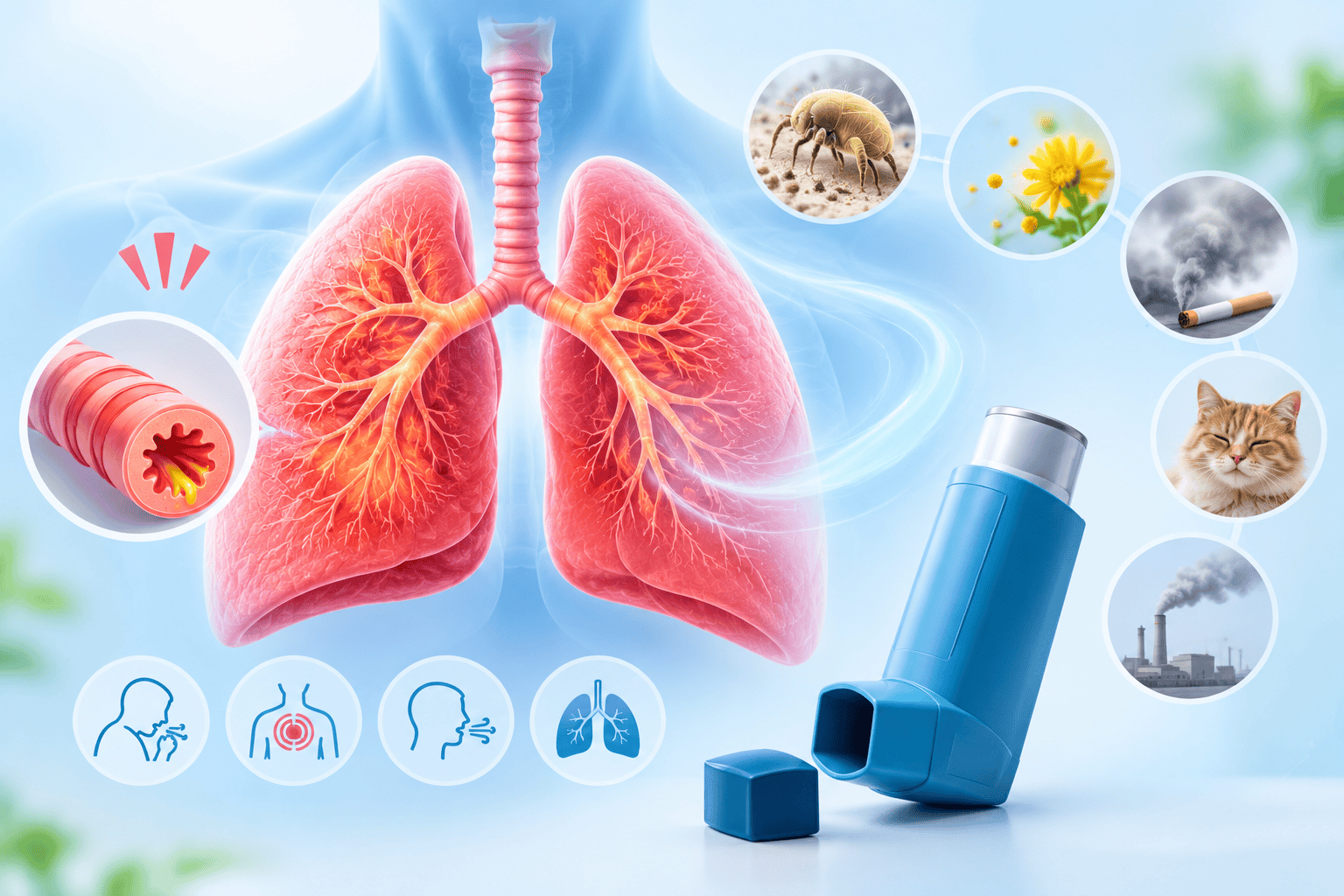
Asthma is a chronic respiratory condition in which the airways become inflamed, swollen and sensitive to certain triggers. During an asthma episode, the muscles surrounding the airways may tighten, the airway lining may swell, and excess mucus may develop.
These changes narrow the air passages, making it difficult for air to move in and out of the lungs.
Asthma symptoms can vary from person to person. Some people experience occasional mild symptoms, while others may have frequent episodes that interfere with their daily activities and sleep.
Although asthma cannot currently be cured, appropriate treatment can help control symptoms and allow most people to lead active, healthy lives.
Early Warning Signs and Symptoms of Asthma
Recognising the early symptoms of asthma is important for timely diagnosis and treatment. The symptoms may appear occasionally or become more frequent depending on the severity of the condition and exposure to triggers.
Common asthma symptoms include:
- Frequent Coughing
A persistent or recurring cough can be an early sign of asthma. It may become worse at night, early in the morning, during exercise or after exposure to dust and other irritants.
In some people, coughing may be the main symptom of asthma.
- Wheezing
Wheezing is a whistling sound that occurs while breathing, particularly when breathing out. It happens when air moves through narrowed airways.
Recurring wheezing should be evaluated by a healthcare professional.
- Shortness of Breath
People with asthma may feel that they are not getting enough air. Breathing may become difficult during physical activity, at night or after exposure to certain triggers.
- Chest Tightness
Asthma can cause a feeling of pressure, tightness or discomfort in the chest. Some people describe it as feeling as though something is squeezing their chest.
- Difficulty Sleeping Due to Breathing Problems
Night-time coughing, wheezing and breathlessness can disturb sleep. If breathing difficulties repeatedly wake you up, it is important to consult a doctor.
Important: Asthma symptoms may come and go. Even if you feel normal between episodes, recurring symptoms should not be ignored.
Common Triggers That Can Cause Asthma Symptoms
Asthma triggers are factors that irritate sensitive airways and cause symptoms to develop or worsen. Triggers differ from person to person.
Some of the common asthma triggers include:
- Dust and Dust Mites
Household dust, dust mites and dust accumulated in mattresses, carpets, curtains and soft furnishings can trigger asthma symptoms in sensitive individuals.
- Air Pollution and Smoke
Vehicle emissions, industrial pollution, cigarette smoke and burning materials can irritate the airways and worsen breathing problems.
- Pollen and Allergens
Pollen, mould spores, pet dander and other allergens may trigger asthma symptoms in people who are sensitive to them.
- Respiratory Infections
Common colds, flu and other respiratory infections can increase airway inflammation and trigger asthma flare-ups.
- Cold Air and Weather Changes
Exposure to cold air or sudden changes in temperature may trigger coughing, wheezing and breathing difficulties in some people.
- Physical Activity
Exercise can trigger asthma symptoms in some individuals, particularly when asthma is not well controlled. However, people with asthma should not avoid physical activity altogether. With appropriate management, most can exercise safely.
- Strong Smells and Chemical Irritants
Perfumes, cleaning products, paint fumes and other strong chemical smells may irritate the airways and trigger symptoms.
Identifying personal triggers and reducing exposure to them can help improve asthma control.
What Causes Asthma?
The exact cause of asthma is not fully understood. It is believed to develop due to a combination of genetic and environmental factors.
Some factors associated with an increased risk of developing asthma include:
- A family history of asthma.
- Personal history of allergies or allergic conditions.
- Exposure to tobacco smoke, particularly during childhood.
- Exposure to air pollution and certain workplace irritants.
- Childhood respiratory infections.
- Certain environmental exposures during early childhood.
Having one or more of these risk factors does not necessarily mean that a person will develop asthma.
.
How Is Asthma Diagnosed?
Asthma symptoms can sometimes resemble those of other respiratory conditions. Therefore, proper medical evaluation is important before starting treatment.
A pulmonologist may recommend the following assessments and tests based on your symptoms and medical history.
- Medical History and Physical Examination
The doctor will ask about your breathing difficulties, coughing, wheezing, allergies, family history and possible exposure to asthma triggers.
A physical examination may also be performed to assess your respiratory health.
- Spirometry Test
Spirometry is an important lung function test used to assess how much air you can breathe out and how quickly you can exhale.
It can help identify airflow obstruction and assess whether breathing improves after using a bronchodilator medicine.
- Peak Expiratory Flow Test
This test measures how quickly you can breathe out air from your lungs. It may help monitor changes in airflow and assess asthma control.
- Allergy Testing
If allergies are suspected to be triggering your symptoms, the doctor may recommend appropriate allergy tests.
Not everyone requires all these tests. Your pulmonologist will decide which investigations are suitable based on your condition.
Available Treatment Options for Asthma
Asthma treatment aims to control airway inflammation, prevent symptoms, reduce the risk of severe attacks and improve quality of life.
The treatment plan depends on the patient’s age, symptoms, asthma severity and response to medication.
- Inhalers
Inhalers are among the most important treatments for asthma. They deliver medication directly into the airways.
Different types of inhalers are available:
Controller inhalers: These commonly contain inhaled corticosteroids that reduce inflammation in the airways and help prevent asthma symptoms over time.
Reliever inhalers: These contain medicines that help relax tightened airway muscles and provide relief from breathing symptoms.
Some treatment plans use combination inhalers containing both anti-inflammatory and bronchodilator medicines.
The choice of inhaler and its frequency of use should be determined by a doctor. Current asthma treatment guidelines recommend inhaled corticosteroid-containing treatment rather than relying on a short-acting reliever inhaler alone.
- Oral Medicines
Certain oral medicines may be prescribed in selected cases, depending on the patient’s condition and response to inhaled treatment.
Oral corticosteroids may be required for some severe flare-ups, but they are not suitable for routine self-medication.
- Nebulisation
A nebuliser converts liquid medication into a fine mist that can be inhaled through a mask or mouthpiece.
It may be used in certain situations, particularly during acute asthma episodes when recommended by a healthcare professional.
- Biologic Therapies
For selected patients with severe asthma that remains uncontrolled despite appropriate standard treatment, specialist medicines known as biologics may be considered.
These treatments target specific pathways involved in airway inflammation and require specialist assessment.
- Asthma Action Plan
A personalised asthma action plan helps patients understand how to manage their condition.
It generally includes:
- Daily medication instructions.
- Steps to follow when symptoms begin to worsen.
- Guidance on monitoring symptoms or peak flow, if recommended.
- Instructions on when to seek emergency medical attention.
Following the prescribed treatment plan and attending regular reviews are essential for long-term asthma management.
How to Prevent Asthma Attacks
Although asthma cannot always be prevented, certain measures can help reduce exposure to triggers and lower the risk of flare-ups.
- Identify and avoid personal asthma triggers wherever possible.
- Keep your home clean and reduce dust accumulation.
- Avoid smoking and exposure to second-hand smoke.
- Follow your prescribed inhaler schedule.
- Learn and practise the correct inhaler technique.
- Stay up to date with recommended vaccinations.
- Maintain regular physical activity according to your doctor’s advice.
- Attend follow-up appointments to review your asthma control.
- Keep your prescribed reliever medication accessible as advised by your doctor.
Do not stop controller medication simply because your symptoms have improved. Discuss any changes to treatment with your doctor.
When Should You See a Pulmonologist?
Consult a pulmonologist if you experience:
- Frequent coughing, particularly at night.
- Repeated wheezing or chest tightness.
- Breathlessness during routine activities.
- Breathing difficulties that interfere with sleep.
- Recurring respiratory symptoms after exposure to dust or allergens.
- Increasing dependence on your reliever inhaler.
- Asthma symptoms that do not improve with your prescribed treatment.
Early assessment can help identify the cause of your symptoms and ensure that you receive appropriate treatment.
When Is Asthma an Emergency?
A severe asthma attack can become life-threatening and requires immediate medical attention.
Seek emergency care if you experience:
- Severe difficulty breathing.
- Inability to speak in complete sentences because of breathlessness.
- Rapidly worsening symptoms.
- Very little relief from your prescribed reliever medication.
- Blue or grey lips or fingernails.
- Drowsiness, confusion or exhaustion associated with breathing difficulty.
Do not wait for symptoms to settle on their own. Follow your asthma action plan and seek emergency medical help immediately.
Pulmonology Care at Shifa Hospitals, Tirunelveli
Living with asthma does not mean giving up your daily activities. With timely diagnosis, appropriate medication and regular monitoring, most people with asthma can manage their symptoms and maintain a good quality of life.
At Shifa Hospitals, Tirunelveli, patients can consult the pulmonology team for the evaluation and management of respiratory conditions, including asthma.
If you or a family member experiences recurring coughing, wheezing, chest tightness or breathing difficulties, consult a pulmonologist for proper assessment and guidance.
Take your breathing seriously. Early evaluation and the right asthma care can make a difference.
November 16, 2026
shifa_hospitals
Recovering from angioplasty goes beyond the hospital stay - it’s a journey of lifestyle changes that protect the heart for years to come. One of the most...
October 29, 2026
shifa_hospitals
Recovering from angioplasty goes beyond the hospital stay - it’s a journey of lifestyle changes that protect the heart for years to come. One of the most...
October 17, 2026
shifa_hospitals
Recovering from angioplasty goes beyond the hospital stay - it’s a journey of lifestyle changes that protect the heart for years to come. One of the most...
September 22, 2026
shifa_hospitals
Recovering from angioplasty goes beyond the hospital stay - it’s a journey of lifestyle changes that protect the heart for years to come. One of the most...
September 11, 2026
shifa_hospitals
Recovering from angioplasty goes beyond the hospital stay - it’s a journey of lifestyle changes that protect the heart for years to come. One of the most...
August 22, 2026
shifa_hospitals
Recovering from angioplasty goes beyond the hospital stay - it’s a journey of lifestyle changes that protect the heart for years to come. One of the most...
August 12, 2026
shifa_hospitals
Recovering from angioplasty goes beyond the hospital stay - it’s a journey of lifestyle changes that protect the heart for years to come. One of the most...
July 30, 2026
shifa_hospitals
Recovering from angioplasty goes beyond the hospital stay - it’s a journey of lifestyle changes that protect the heart for years to come. One of the most...
July 18, 2026
shifa_hospitals
Recovering from angioplasty goes beyond the hospital stay - it’s a journey of lifestyle changes that protect the heart for years to come. One of the most...
June 24, 2026
shifa_hospitals
Recovering from angioplasty goes beyond the hospital stay - it’s a journey of lifestyle changes that protect the heart for years to come. One of the most...