
Is Rheumatoid Arthritis Hereditary?
Understanding the Risks and Finding the Right Care
Rheumatoid arthritis (RA) is more than just joint pain-it’s an autoimmune condition that can change a person’s life. One of the most common questions people ask is: “Is rheumatoid arthritis hereditary?“
If you or a loved one has been diagnosed with RA, or you have a family history of it, you might worry about passing it on. While genetics do play a role, it’s not the whole story. Environment, lifestyle, and early detection all matter.
In this article, let’s demystify whether RA is hereditary, how the risk is passed along, and what you can do if you’re at risk. We’ll also discuss how finding a trusted rheumatologist, such as Dr. N. Subramanian at Shifa Hospitals in Tirunelveli, can make a real difference in managing or even preventing severe complications.
Our goal is to give you clear, compassionate answers so you can make informed choices about your health and your family’s well-being.
What Is Rheumatoid Arthritis?
Rheumatoid arthritis is an autoimmune disease where the body’s immune system mistakenly attacks the joints. Unlike osteoarthritis, which is primarily due to wear and tear, RA is driven by chronic inflammation.

Common symptoms include:
- Swollen, tender joints
- Morning stiffness lasting longer than 30 minutes
- Fatigue or malaise
- Fever in some cases
Is Rheumatoid Arthritis Really Hereditary?
This is a question that worries many families: “Is rheumatoid arthritis hereditary?” The answer is nuanced.
- Genetics do increase risk: Having a close relative with RA (parent, sibling) increases your own risk two- to threefold.
- Not purely inherited: RA isn’t passed down in a straightforward way like some genetic disorders. Instead, multiple genes contribute small risks.
- Environmental triggers matter: Smoking, infections, and other environmental factors can activate these genetic risks.
For example, even identical twins don’t always both get RA, which suggests genes are just part of the story.
Key takeaway: You can inherit a higher risk, but you won’t automatically develop RA just because a family member has it.
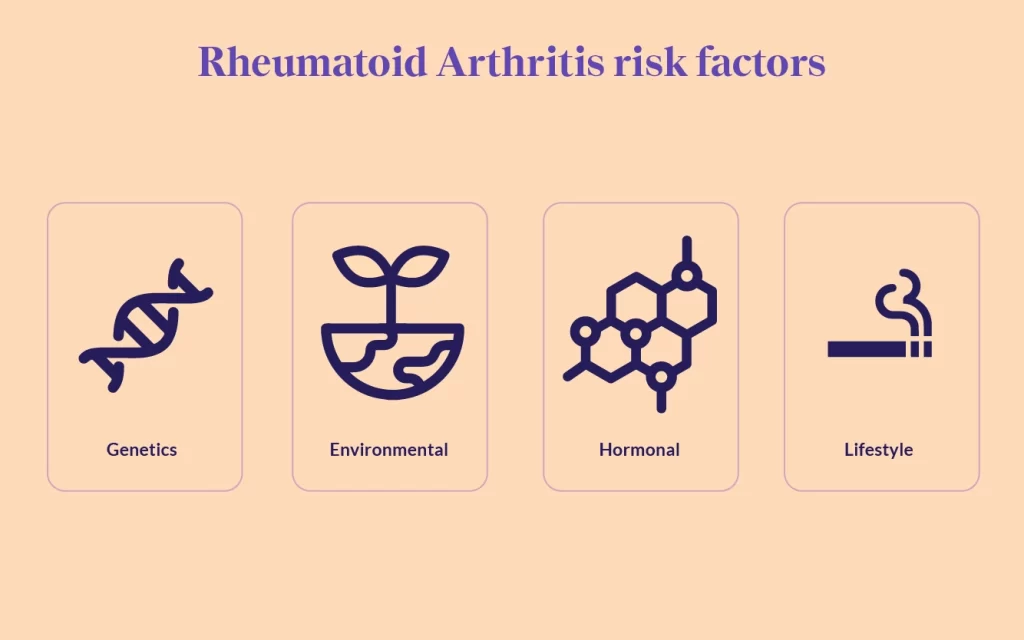
Genetic Factors in Rheumatoid Arthritis
Researchers have identified certain genes linked to RA, most notably:
- HLA-DR4 gene variant: Strongly associated with RA, particularly severe forms.
- PTPN22 gene: Affects immune regulation, increasing susceptibility.
- STAT4 and others: Involved in immune system signaling.
But having these genes doesn’t mean you’ll definitely get RA. Think of them as setting the stage, while lifestyle and environmental factors decide whether the “play” happens.
Lifestyle and Environmental Triggers
Even if you have a genetic risk, lifestyle choices can greatly influence whether RA develops or stays dormant.
Key environmental triggers include:
- Smoking: The most well-established environmental risk factor. Smokers with genetic risk are far more likely to develop RA.
- Obesity: Increases inflammation in the body, which can trigger autoimmune responses.
- Infections: Certain viral or bacterial infections may act as triggers.
- Stress: While less well-defined, chronic stress can influence immune function.
If you have a family history, taking steps to reduce these triggers can meaningfully lower your personal risk.
Can Rheumatoid Arthritis Be Prevented If It’s Hereditary?
While there’s no guaranteed prevention, you can reduce risk with smart choices:
- Don’t smoke or quit if you do.
- Maintain a healthy weight.
- Eat an anti-inflammatory diet rich in fruits, vegetables, whole grains, and omega-3 fatty acids.
- Manage stress through mindfulness, exercise, or counseling.
- Get regular medical checkups, especially if you have early symptoms.
These strategies don’t just help with RA-they improve overall health.
When to Seek Help: Rheumatoid Arthritis and Hereditary Risk
If you have joint pain, stiffness, or swelling lasting more than a few weeks, especially with a family history of RA, don’t ignore it.
Seeing a rheumatologist early can mean:
- More accurate diagnosis
- Early treatment to slow progression
- Better quality of life long-term
It’s important to find someone you trust who listens to you and tailors a treatment plan to your needs.
Best Rheumatologist Doctor in Tirunelveli: Dr. N. Subramanian at Shifa Hospitals
For those in and around Tirunelveli, finding the right specialist is key. Dr. N. Subramanian at Shifa Hospitals is widely regarded for his expertise in diagnosing and treating autoimmune conditions like Rheumatoid Arthritis.
Patients Appreciate His:
- Clear communication about complex conditions
- Personalized treatment plans
- Focus on patient education and empowerment
If you’re worried about hereditary risk, Dr. Subramanian can help you understand your situation, suggest lifestyle changes, and monitor for early signs.
Shifa Hospitals also offers comprehensive facilities for lab tests, imaging, and ongoing management-making it easier to get the care you need close to home.
Practical Tips for Managing Hereditary Rheumatoid Arthritis Risk
If you know RA runs in your family, try these practical steps:
Potential Risks Include:
- Know your family history: Talk to relatives about diagnoses and age of onset.
- Get screened early: Don’t wait for severe symptoms-early evaluation is key.
- Adopt healthy habits: Quit smoking, eat well, exercise gently, manage stress.
- Monitor symptoms: Watch for persistent joint swelling, pain, or stiffness.
- Stay informed: Reliable sources and regular consultations help you stay ahead.
Conclusion
Rheumatoid arthritis has a hereditary component, but it’s not your destiny. Genetics increase your risk, but environment and lifestyle play major roles in whether the disease develops.
If you’re worried about RA because of your family history, don’t panic. Instead, focus on what you can control-healthy habits, early detection, and expert guidance.
For those in Tirunelveli, consulting a trusted rheumatologist like Dr. N. Subramanian at Shifa Hospitals can give you the clarity and support you need. Don’t wait for joint pain to take over your life-learn more, take action, and protect your health for the long term.
If you’d like to understand your personal risk or need specialized care, consider booking a consultation at Shifa Hospitals to explore your options.
Rheumatology Specialist
Shifa Hospitals